Latest News
November 27, 2025Other NewsPrior to the establishment of European Crucible, a total of 301 highly talented, ‘research leaders of the future’ took part in our award-winning Scottish Crucible programme over a ten-year period.  Together, they represented all academic disciplines and were based in more than 20 Universities and research Institutions across Scotland.  What impact did participating in Scottish Crucible have on their subsequent work and careers? And how has it helped shape their approach to multidisciplinary collaborations, public engagement and academic leadership?   Episode 8: Scottish Crucible Reflections – 1: Research collaboration, leadership and careers Episode 9: Scottish Crucible Reflections -2: Research collaboration, leadership and careers Episode 10: Scottish Crucible Reflections – 3: Research collaboration, leadership and careers Listen or subscribe to the European Crucible podcasts European Crucible Podcasts [...]
October 31, 2025Other NewsListen to broadcaster, Quentin Cooper, as he interviews team members from several pilot projects that received seed funding and learn how their multidisciplinary research activities were initiated and enabled through their participation in European Crucible. Listen or subscribe to the European Crucible podcasts Episode 1: Water quality monitoring – Project: UV-Go Episode 2: Storytelling and games to address trauma -Project: Mavka Episode 3: Shedding light on cell processes for health – Project: Autodose Episode 4: Coral reef restoration with magnets – Project: Mirror Episode 5: Policy making and green technology – Project: rECOver Episode 6: Science communication -Project: Science and human histories Episode 7: Nanoscience -Project: Nanoparticles and the human body European Crucible Podcasts [...]
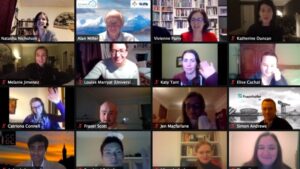
November 3, 2022News & EventsEuropean Crucible 2022 generates new Scottish-European multi-disciplinary research European Crucible 2022 researchers and contributors. The European Crucible 2022 programme has culminated in seed-funding awards for 8 new multi-disciplinary research projects led by teams of Scottish-European collaborative researchers. Multi-disciplinary Research Projects Following from European Crucible 2022, researchers from 7 Scottish Universities and 11 other European countries, will collaboratively undertake pilot research projects over the next year addressing a range of scientific, technological, environmental, cultural and societal challenges, as follows: European Crucible 2022 – selected research projects and location of research team members: 1.AutoDOSE: AUTOphagy Dynamic Optimisation, Statistical Learning and Experimental Design – Scotland, France, Greece and Norway 2. In-Cell-Net – Scotland, France and Luxembourg. 3. MIRROR: MagnetIc Reef RestORation – Scotland, Germany, Greece, Ireland and Italy 4. Biodegradable Wearable Wireless Piezoelectric Nanosensors for Personalised Motor-neuro rehabilitation – Scotland, France and Netherlands 5. MAVKA: Co-creative gamified storytelling for trauma – Scotland and Ukraine 6. rECOver: Policy Making and Green Technology – Advancing Engagement Collider Event – Scotland, France and Turkey 7. Science and Human Histories – Scotland, Netherlands and Spain 8. A digital twin for hydrogen storage – Scotland, France and Luxembourg Scotland-Europe collaborations European Crucible 2022 has been supported by the Scottish Government via the SFC Saltire initiative. It was organised jointly by SUPA SUPA | Physics Scotland | Scottish Universities Physics Alliance  and the Research Futures Academy at Heriot-Watt University on behalf of all Scottish Research Pools.  It was delivered in partnership with the University of Luxembourg (via Prof Stéphane Bordas) and CentraleSupélec, France (via Prof Marc Sciamanna): Partners 2022 – Scottish Crucible  Multiple keynote guests contributed to the European Crucible 2022 programme, including the Prof Sir John Ball, President of the Royal Society of Edinburgh; Dr Debora Revoltella, Chief Economist, European Investment Bank HQ, Luxembourg; and Prof Cédric Villani, Fields Medal, University of Lyon (formerly Member of the French National Assembly). European Crucible researcher cohorts The second annual European Crucible programme aimed to bring together outstanding researchers from different disciplines, institutions and countries to stimulate new interdisciplinary research collaborations between Scottish and European researchers.  The cohort comprised 25 researchers from Scotland and 26 researchers from 13 other European countries: European Crucible 2022: European Cohort – Scottish Crucible Commenting on their experiences of European Crucible 2022, participants said: “I am thrilled that I had a chance to participate in this year’s European Crucible programme.  Excellent initiative, and I can’t wait to start working with my fellow Cruciblists.” Dr Antonija Grubišić-Čabo, Associate Professor of Advanced Materials, University of Groningen, The Netherlands “Thank you to everyone who made this year’s online Crucible possible.  It was a great experience; I met some brilliant people and I have even started a few new collaborations.” Dr Karen Donaldson, Project Manager, The National Robotarium, Heriot-Watt University, Scotland “This whole European Crucible was simply amazing. First time ever in such a rich environment with amazing, cross-disciplinary fellow Cruciblist researchers.  Kudos to the organisation and facilitators.” Dr Rubén Salvador, Associate Professor of Computer Engineering, CentraleSupélec de Rennes, France. ——————————————————————————————————————– For further details, contact: EuropeanCrucible@hw.ac.uk Research Futures Academy Heriot-Watt University European Crucible [...]
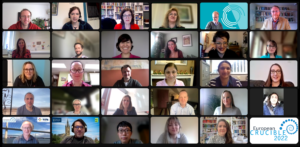
April 13, 2022News & EventsEuropean Crucible 2022 programme launches for the Scottish cohort Twenty-three of the twenty-five Scottish Cruciblists; guest speakers Prof Rory Duncan and Stuart Fancey; host Vivienne Parry; European Crucible directors Dr Ruth Neiland and Prof Alan Miller, and coordinator, Dr Natasha Nicholson. The second year of the prestigious European Crucible programme for “research leaders of the future” has commenced with two virtual events for Scottish researchers focused on international collaboration and UK research strategy. European Crucible aims to bring together outstanding researchers from different disciplines, institutions and countries to stimulate new interdisciplinary research collaborations between Scottish and European researchers.  The first online events were jointly chaired by writer and broadcaster, Vivienne Parry OBE and by Prof Alan Miller FRSE from SUPA  SUPA | Physics Scotland | Scottish Universities Physics Alliance. They featured an intensive programme of research presentations and interactive networking activities, with participants also engaging with notable keynote speakers, namely: Simon Andrews, Executive Director of Fraunhofer UK Research Ltd;Prof Sir Ian Boyd, former Chief Scientific Adviser at DEFRA and current Chair of the UK Research Integrity Office;Prof Rory Duncan, Director of Talent and Skills, UK Research and Innovation (UKRI);Dr Stuart Fancey, Director of Research and Innovation, Scottish Funding Council;Prof Julie Fitzpatrick, Scientific Director of the Moredun Research Institute and Chief Scientific Adviser to the Scottish Government;Prof Jaime Toney, co-Director of the Centre for Sustainable Solutions, University of Glasgow. Reflecting on her experiences of European collaboration and meeting the Scottish cohort of European Crucible, Prof Julie Fitzpatrick OBE said: “Research links between Scotland and the EU have long been the platform for some fantastic collaborations, with EU funding supporting multi- and inter-disciplinary research that truly crosses boundaries. Research and innovation is all about partnerships, and European Crucible provides an opportunity for Scottish researchers to make those critical contacts that will establish research programmes for the future. It was great to see this in action at a virtual European Crucible Lab!” The cohort of just 25 talented researchers from Scotland were competitively chosen to undertake European Crucible 2022. They represent diverse academic disciplines and are based at 12 different Universities and research institutes across Scotland.  Four of this year’s cohort are from Heriot-Watt University – Dr Karen Anne Alexander, Assistant Professor at the International Centre for Island Technology, Orkney; Dr Heidi Burdett, Associate Professor, Lyell Centre, Edinburgh; Dr Mel McKendrick, Assistant Professor in Psychology and CEO of Optomize Ltd; and Dr Ryan Pereira, Associate Professor Lyell Centre, Edinburgh. Commenting on her experience of European Crucible, Dr Mel McKendrick said: “In the first couple of European Crucible meetings I have been truly inspired by the synergies between several of the other delegates’ work and my own. This has already helped to generate new ideas and ways of working with people. I am so excited to see what the next set of labs will offer as we meet other Crucible researchers from Europe”.  European Crucible 2022 (supported by Scottish Government via the SFC Saltire initiative), is organised jointly by SUPA and the Research Futures Academy at Heriot-Watt University on behalf of all Scottish Research Pools and in partnership with CentraleSupélec, France. The next stages of European Crucible 2022 will see a further 25 researchers from across Europe join the cohort to complete the programme with their counterparts from Scotland. [...]
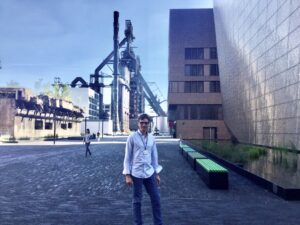
June 10, 2021News & EventsInnovative research collaborations initiated via European Crucible 2021 European Crucible 2021 Luxembourg collaborator and host, Prof Stéphane Bordas, at the University of Luxembourg, Belval Campus. The European Crucible 2021 programme has culminated in the selection of 7 collaborative research projects for funding support from the Scottish Funding Council, Luxembourg National Research Fund, and SUPA (Scottish Universities Physics Alliance). The awards go to multi-disciplinary teams of researchers who had each won a place on the inaugural European Crucible leadership programme that ran virtually in spring 2021.* The successful project proposals will be undertaken over the next year by groups of European Crucible Alumni from 11 European countries, as follows: European Crucible 2021 – selected research projects and location of research team members: Developing New Tools for Evaluating Nanoscale Biological Interactions – Scotland, Czech Republic, France, Netherlands, Portugal Enhancing young people’s use of Green and Blue spaces: a Public and Patient Involvement Study – Scotland, Luxembourg, Netherlands and Spain MYinsulin: Low-Cost, Sustainable and Resilient Insulin Supply Alternatives to Benefit Low and Lower-Middle Income Communities – Scotland, France, Luxembourg, Norway and Switzerland Nanostructure-Enhanced Gallium Oxide UV Photodetectors for In-Situ Water Quality Monitoring – Scotland, France and Luxembourg ROBOCAT – Robotic Assisted Discovery of CO2 Reduction Catalysts – Scotland and France Stakeholder Engagement Activities to Inform an Intervention to Support People Released from Prison Achieve Good Health and Social Outcomes – Scotland, Netherlands and Norway Transperceptual Approach to Uncovering the Secrets of Biological Tissues – Focus on the Knee Meniscus – Scotland, England and Luxembourg European Crucible 2021 was organised in partnership between i) the Scottish Crucible team of the Research Futures Academy (Heriot-Watt University); ii) ‘SUPA’ on behalf of the network of Scottish Research Pools and iii) the University of Luxembourg.  The key Luxembourg host and collaborator was Prof Stéphane Bordas, Legato Team Leader, who coordinated the engagement of Luxembourg-based institutions and researchers with the virtual programme: Partners – Scottish Crucible Prof Bordas said, “Several years of productive collaboration with Scotland led to this first European Crucible, an exceptional multi-disciplinary event, supported by all Luxembourg Research Institutes. As a participant of the first Scottish Crucible, I could feel the palpable excitement of our European Cruciblists, who intellectually bridged all disciplinary and national boundaries. These young and dynamic researchers all embodied the strong European feeling which Luxembourg and Scotland share”. And commenting on the success of European Crucible 2021 in building interdisciplinary research collaborations, Dr Ruth Neiland, Head of the Research Futures Academy and Scottish Crucible Director, said “Many congratulations to all of our European Crucible 2021 teams on their highly innovative and interdisciplinary proposals! We look forward to seeing how these collaborations develop – and the impact they can have in tackling scientific and societal challenges for Europe and beyond.” Further detailsEuropeanCrucible@hw.ac.ukResearch Futures AcademyHeriot-Watt University *Note on European Crucible participants 25 early and mid-career researchers from Scotland’s universities and research institutes were competitively selected to take part in European Crucible 2021 (from the universities of Abertay, Dundee, Edinburgh, Glasgow, Napier, St Andrews, Stirling and Strathclyde; and James Hutton Institute, SAMS, and NHS Tayside):  https://scottishcrucible.org.uk/european-crucible/scottish-cohort/ They were joined by 25 equivalent researchers from 13 other European countries (Belgium, Czech Republic, England, France, Germany, Iceland, Italy, Luxembourg, Netherlands, Norway, Portugal, Spain and Switzerland):  https://scottishcrucible.org.uk/european-crucible/european-cohort/ [...]
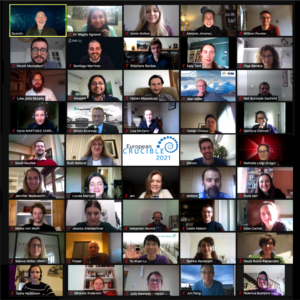
March 30, 2021News & Events / UncategorizedEuropean Crucible 2021, an initiative aiming to create a new network of research leaders from Scotland and Europe, has completed its inaugural programme with an interdisciplinary collaboration challenge for its 50 specially selected Crucible participants. Distributed across 13 European countries and representing over 30 Universities and research institutes, European Crucible participants undertook the highly interactive, virtual programme as a group together over 2 months. Now their challenge is to formulate collaborative group proposals for pilot projects which are international, interdisciplinary, innovative and sustainable. The winning bids to the European Crucible Project Fund will be announced in May 2021. Inspiration as to the potential of ambitious interdisciplinary research collaboration was offered throughout European Crucible 2021 by high-level, invited speakers from a variety of sectors, including: Government and funding bodies: Dr Stuart Fancey, Director of Research and Innovation, Scottish Funding Council; Christina Miller, Director, UK Research Office, Brussels; Richard Lochhead, Member of the Scottish Parliament, Scottish Government Minister for Further Education, Higher Education and Science. European research and financial institutions: Simon Andrews, Executive Director, Fraunhofer UK Research Ltd; Dr Debora Revoltella, Chief Economist, European Investment Bank, Luxembourg. University sector: Professor Charles Cockell, co-Director of the UK Centre for Astrobiology, University of Edinburgh; Dr Philippe Delfosse, Advisor to the Vice-Rector for Research, University of Luxembourg; Professor Sir Jim McDonald, Principal and Vice-Chancellor, University of Strathclyde & President, Royal Academy of Engineering. Media and broadcasting: Quentin Cooper; Vivienne Parry Scottish Crucible Academic Alumni: Professor Stéphane Bordas, Professor of Computational Sciences, University of Luxembourg; Professor Mirela Delibegovic, Dean for Industrial Engagement in Research and Knowledge Transfer, University of Aberdeen; Professor Stuart Reid, Head of Biomedical Engineering, University of Strathclyde. European Crucible was organised in partnership between i) the Scottish Crucible team of the Research Futures Academy, Heriot-Watt University; ii) ‘SUPA’ on behalf of the network of Scottish Research Pools ; and iii) the University of Luxembourg.  It was funded by the Scottish Government (via the Scottish Funding Council), the FNR (Luxembourg National Research Fund), and the University of Luxembourg. 25 researchers from Scotland and 25 researchers from 12 other European countries were selected to take part in the inaugural European Crucible programme. Reflecting on their experience of European Crucible, participants said: “Absolutely loved this programme. Inspiring researchers, innovative ideas, but most of all amazing people” Dr Fiona Kerr, Lecturer in Molecular Pharmacology, Edinburgh Napier University. “Very happy, honoured and humbled to be part of this wonderful initiative! Interdisciplinary connections are the key to push forward revolutionary ideas!” Dr Nicolò Maccaferri, Research Associate and Principal Investigator, Department of Physics and Materials Science, University of Luxembourg. “Fabulous European Crucible closing session.  The magic of interdisciplinary collaborations manifesting in all sorts of weird and wonderful ways.  Looking forward to seeing where these new connections lead!” Dr Katy Tant, Chancellor’s Fellow, Department of Mathematics and Statistics, University of Strathclyde. Further details: European Crucible is built on the success of the national ‘Scottish Crucible’ programme: https://scottishcrucible.org.uk/european-crucible/   Participants: Scottish Cohort:   https://scottishcrucible.org.uk/european-crucible/scottish-cohort/ Rest of Europe Cohort:  https://scottishcrucible.org.uk/european-crucible/european-cohort/ Contact: EuropeanCrucible@hw.ac.ukScottish Crucible DirectorateResearch Futures AcademyHeriot-Watt University [...]
December 16, 2020News & EventsThe new European Crucible programme for “research leaders of the future” has launched with its first virtual event held live for Scottish researchers. 25 top researchers competitively selected from universities and research institutes across Scotland, have met to discuss international collaboration and interdisciplinarity in an intensive event chaired by writer and broadcaster, Vivienne Parry. They were joined by notable keynote speakers including Prof Dame Anne Glover, President of the Royal Society of Edinburgh and formerly Chief Scientific Adviser to the President of the European Commission; Simon Andrews, Executive Director of Fraunhofer UK Research Ltd; and Prof Rory Duncan, Director of Talent and Skills, UK Research and Innovation (UKRI).  Reflecting on his meeting the Scottish cohort of European Crucible at the event, Dr Stuart Fancey, Director of Research and Innovation at the Scottish Funding Council (SFC) said: “What a fantastically talented and collaborative group, and all determined to build their European research networks. Well done, Scottish Crucible”. European Crucible aims to stimulate new interdisciplinary research collaborations between Scottish and European researchers and builds on the success of Scottish Crucible and the Scottish Research Pools over the past decade. European Crucible is supported by the Scottish Government via the Scottish Funding Council, and by the Luxembourg National Research Fund (FNR) and the University of Luxembourg. It will next run as 4 workshops in February and March 2021, when 25 specially selected European researchers will join their Scottish counterparts undertaking the programme. Of his participation in the initial European Crucible meeting, member of the Scottish contingent, Dr Leonardo Rios Solis, Lecturer at the Institute of Bioengineering, University of Edinburgh, said: “It was a pleasure being selected and highlighted by the Scottish Crucible as one of Scotland’s research leaders of the future. It was great to meet lots of young researchers based in Scotland with crazy and cool ideas to collaborate. Can’t wait to meet the European partners too!” The call for Scottish applications for European Crucible is now closed. The deadline for applications from researchers in European countries is 13 January 2021. For further details, visit: https://scottishcrucible.org.uk/european-crucible/ [...]
November 15, 2019News & EventsScottish Crucible Alumni joined colleagues at Heriot-Watt University for a special networking event in November 2019 for participants of the Scottish Crucible programme hosted as part of Heriot-Watt’s Festival of Research: Heriot-Watt Festival of Research – Heriot-Watt University (hw.ac.uk) Five Scottish Crucible Alumni were invited to give presentations reflecting on their careers and research since undertaking Scottish Crucible and to lead discussions on the impact of interdisciplinary research collaboration.  They were: Prof Tim Drysdale (University of Edinburgh) – from Scottish Crucible (SC) 2010Prof Helen Hastie (Heriot-Watt University) – SC 2010Dr Adam Stokes (University of Edinburgh) – SC 2013Dr Catherine Jones (Strathclyde University) – SC 2017Dr Alice Toniolo (University of St Andrews) – SC 2017 The event also featured highly topical keynote presentations on national research strategies and opportunities affecting research leaders by UKRI Director for Talent and Skills, Prof Rory Duncan (Heriot-Watt University) and Scottish Funding Council Director of Research and Innovation, Dr Stuart Fancey.  Other opportunities for research engagement with other sectors were explained by Dr Linda Galloway from DASA (Defence and Security Accelerator). The event culminated in a presentation by Kirsty Grainger, Director of the new UKRI ‘Future Leaders Fellowship Programme’: Future Leaders Fellowships – UKRI and by Scottish Crucible Alumni being invited to join other sessions in the Festival – including ‘Pioneering Research’ sessions on Robotics and Health Innovation & Technology. Further details, contact: ResearchFutures@hw.ac.ukResearch Futures AcademyHeriot-Watt University [...]
January 9, 2019Forums / News & EventsCelebrating a decade of Scottish Crucible Academics, researchers and business leaders met at Edinburgh Business School, Heriot-Watt University last week to take part in this year’s Scottish Crucible Forum. After a decade of delivery, and with over 300 “research leaders of the future” having taken part in Scottish Crucible, the annual Forum was an opportunity to celebrate the impact Scottish Crucible has had on its Alumni’s careers and research activities and consider new opportunities for researchers in the current research and innovation landscape. The Scottish Crucible Alumni reported on funding won and on new projects and collaborations forged, whilst also reflecting on their individual career progression since taking part in the Scottish Crucible leadership and development programme. The Forum enabled them to further network with colleagues from the past 10 years’ cohorts who represent multiple academic disciplines and research institutions in Scotland and now form the Scottish Crucible Alumni Network. “I have been very impressed with the breadth of this network”, said external Forum guest, Dr Ian Archer, Technical Director of IBioIC (Industrial Biotechnology Innovation Centre). Opportunities for researchers to learn from and engage with large research collaborations were highlighted at the Scottish Crucible Forum by Professor Arthur Trew (Deputy Director, Bayes Centre, University of Edinburgh), Professor David Lane (Director of the Edinburgh Centre for Robotics) and Professor Tom Wagner (Co-Director of the Lyell Centre, Heriot-Watt University). The value of collaborative, interdisciplinary research approaches in tackling Grand Challenges and effecting impact were further discussed by invited speakers including Mr Ian Ritchie, non-executive Chairman of Tern plc and Computer Applications Service and Professor Mercedes Maroto-Valer, Assistant Deputy Principal (Research and Innovation) and Director of the Research Centre for Carbon Solutions, Heriot-Watt University. Professor Maroto-Valer said after the event: “I am really impressed with the Alumni from Scottish Crucible. Congratulations on a decade of developing research leaders.” A focus on researchers engaging with the public was emphasised in the Forum, both by the host, broadcaster Quentin Cooper, and by programme speakers such as Dr Hermione Cockburn, Scientific Director of Dynamic Earth and Steven Vass, Scottish Editor, The Conversation. Professor Lesley Yellowlees, University of Edinburgh, discussed the findings of the recently published Tapping all our Talents Review , emphasising the demand for “more to be done” to increase the number and opportunities for women in STEM. Concluding the Scottish Crucible 2018 Forum, Professor Richard Williams, Principal of Heriot-Watt University, and Dr Stuart Fancey, Director of Research and Innovation, Scottish Funding Council, highlighted the opportunities for “research leaders of the future” in Scotland. They emphasised the growing importance of multidisciplinary projects and collaboration with research partners in addressing global challenges and building international collaborations. Scottish Crucible Director, Dr Ruth Neiland, said:“Collaboration, interdisciplinarity, innovation and leadership have been key, underpinning principles of Scottish Crucible for the past 10 years, and its Alumni are thus well placed to tackle a multiplicity of science and societal challenges and expand the boundaries of research and innovation in Scotland and internationally.” [...]
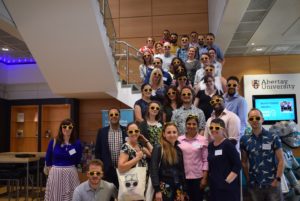
July 27, 2018News & EventsThe Scottish Crucible 2018 programme for Scotland’s talented “research leaders of the future” culminated in the final “lab” focusing on research impact and knowledge exchange.  The 33 Scottish Crucible academics travelled to Dundee for an intensive two-day programme hosted, for the first time, by Abertay University.  It followed on from the earlier Scottish Crucible labs hosted by Heriot-Watt University and the University of Glasgow in May and June 2018. Included in the programme for Lab 3 were sessions on how to develop a public profile as a research leader (with Professor Andy Whiten and Professor Steve Reicher, University of St. Andrews) and how to engage research with public communities (by Anna Day, Manager of UNESCO City of Design, Dundee). Participants also learnt about Scotland’s enterprise and business engagement support from Dr Olga Kozlova (Converge Challenge), Hannah Chater (Royal Society of Edinburgh Enterprise Fellowships), and Lorna Watson (Interface).  Other research impact inspiration came from experiencing ‘hands-on’ computer game development, visits to newly-opened food technology laboratories, and hearing the personal experiences of academics, such as Dr Jon Wilkin and Dr John Babraj (Abertay University), in applying their research to industrial challenges.    The final Lab of Scottish Crucible provided further networking opportunities for Scottish Crucible participants, both with the many Scottish Crucible Alumni who attended a reception at the McManus Art Gallery and Museum, and with senior colleagues who contributed to the day-time programmes. They included Professor Nigel Seaton (Principal) and Mark Batho (Vice-Principal) of Abertay University and Members of Court, Andrew Bailey (Director, Customer Service BT Business and Public Sector) and Gameelah Ghafoor (Head of Financial Software Security, NCR).    Commenting on the final Lab of the 2018 programme, Scottish Crucible participants said, “A fantastic networking and personal experience!”; “It has been memorable and mind-opening”; “A once in a lifetime experience”; “So many connections between scientists, Universities, Scottish locations!”; “Amazing and enriching experience”; “Great people, brilliant ideas, generous hosts! Thank you, Scottish Crucible!” [...]
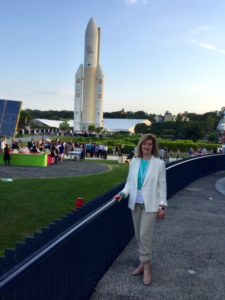
July 15, 2018News & EventsAlong with 4,000 other delegates from across Europe and beyond, Dr Ruth Neiland, Scottish Crucible Director has participated in the 2018 international ESOF conference. ESOF, the ‘European Science Open Forum’ is hosted by a different European city every two years and is the largest interdisciplinary science meeting in Europe. ESOF 2018 took place in Toulouse, France, which is renowned for its aeronautics and space research.  The overall theme of this year’s Forum was “Sharing Science: Towards New Horizons”: https://www.esof.eu/en/ Topics discussed in the 150 conference sessions included global change, sustainable development goals, health in our societies, transport and smart cities, digital technologies, and science communication.  The interplay between science and society was addressed throughout the conference with speakers from the European Commission, UKRI and other research and innovation agencies leading discussions on future science policies and research practice. A key topic of dialogue at ESOF2018 was career development for early stage researchers in Europe, including PhD students and research staff.  Dr Neiland said, “ESOF is an excellent opportunity for researchers, research leaders, policy makers and public stakeholders to come together to discuss our future collaborative endeavours around research in Europe. I was particularly pleased to be able to benchmark some of our researcher development initiatives at Heriot-Watt with those from other countries, and to network with European colleagues working to similar objectives as our own”. Prior to attending ESOF, Dr Neiland was also invited to meet with colleagues at the University of Luxembourg to explore future Crucible collaborations for European “research leaders of the future”. [...]
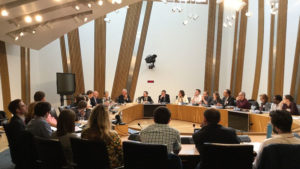
May 25, 2018News & EventsThe 10th annual Scottish Crucible programme for Scotland’s most talented ‘research leaders of the future’ has commenced with media, policy and networking events hosted by the Royal Society of Edinburgh and the Scottish Parliament. Vivienne Parry facilitates discussion panel with leaders from Government, Parliament and Academia. The Scottish Crucible ‘Policy Day’ programme has shown that real opportunities exist in Scotland for researchers, from many different disciplines, to see their research have a wider impact via the policy arena. Dr Ruth Neiland, Scottish Crucible Director Following the launch day at the Royal Society of Edinburgh, which included presentations from Dr Stuart Fancey, Director of Research & Innovation at the Scottish Funding Council, and Ken MacDonald, BBC Scotland’s science correspondent, members of this year’s Scottish Crucible cohort discussed how researchers can better contribute to public policy-making in Scotland and elsewhere.  During a day-long programme held at the Scottish Parliament and facilitated by Vivienne Parry, participants learnt more about the complexity of public policy development and how they can make a difference as sources of research expertise.  The event was an enormous success. It brought together the best of young research talent and exposed them to the challenge of making their science relevant to people and policy. Professor John Underhill, Chief Scientific Adviser at Heriot-Watt University Professional insights came from a range of staff from SPICe (Scottish Parliament Information Centre) and the Scottish Government (Office of the Chief Researcher and Science Advice & Engagement Team).  Prime examples of current policy impact by the academic community were also showcased by Dr Liz Ashton (Edinburgh Napier University), Director of the Scottish Institute for Policing Research, and Dr Heather Morgan of the Institute of Applied Health Sciences, University of Aberdeen. Dr Ruth Neiland, Scottish Crucible Director said, ”The Scottish Crucible ‘Policy Day’ programme has shown that real opportunities exist in Scotland for researchers, from many different disciplines, to see their research have a wider impact via the policy arena.  I hope that many more of the Scottish Crucible Alumni will be encouraged to engage with policy-makers in the future, thereby contributing to wider societal benefit through the application of their academic knowledge to policy-relevant issues.” The Scottish Crucible ‘Policy Day’ culminated in a high-level expert panel comprising senior colleagues from Parliament, Government and Academia who shared their advice and experience with the Scottish Crucible participants.  The panellists were: Roger Halliday, Chief Statistician, Scottish GovernmentKen Hughes, Assistant Chief Executive, Scottish ParliamentEd Mackey, Information Management Senior Adviser, Scottish Natural HeritageAlastair Merrill, Vice Principal (Governance), University of St AndrewsProf. John Underhill, Chief Scientific Adviser, Heriot-Watt UniversityDr Rebekah Widdowfield, Chief Executive, Royal Society of Edinburgh Commenting on the objectives of Scottish Crucible, Heriot-Watt University’s Chief Scientist, Professor John Underhill said, “The event was an enormous success. It brought together the best of young research talent and exposed them to the challenge of making their science relevant to people and policy. It culminated in an opportunity to experience the intensity of giving evidence to a select committee in the Parliament Building itself, learning from those in positions of influence and building their own networks. It is a pleasure to support such an amazing event”. [...]
December 13, 2017News & EventsThe Application Call for Scottish Crucible 2018 is now closed. The Application Call for Scottish Crucible 2018 opened from Wednesday 13th December 2017 until 5pm Tuesday 13 February 2018. Applications received after the closing date will not be considered.  Applicants will be contacted directly once applications have been considered. How does Scottish Crucible work? Scottish Crucible is a series of three residential meetings (Labs), held over three months, each lasting two days. Each Lab will include a range of respected speakers, facilitated break out groups, seminars and skills sessions. Venues and dates for 2018 Scottish Crucible Labs: 10 & 11 May 2018 – Heriot-Watt University, Royal Society of Edinburgh & Scottish Parliament 7 & 8 June 2018 – University of Glasgow 28 & 29 June 2018 – Abertay University, Dundee See Application guidance for how to apply [...]
September 28, 2017News & EventsThe winning Scottish Crucible 2017 collaborative research projects were announced earlier in September, as part of the Royal Society of Edinburgh’s annual awards reception. The Scottish Crucible awards enable the alumni from each year’s cohort to initiate ambitious, collaborative and innovative projects, which are anticipated to lead to long term research relationships across Scotland. The projects are both multidisciplinary and cross-institutional, building on the “Labs” the researchers participated in earlier this year, where they gained knowledge and understanding of creativity, innovation, collaboration, knowledge exchange and how to engage with the media and policy makers. A panel of Fellows of the RSE met in August, chaired by Prof Peter Holmes to review the proposals submitted by the 2017 cohort. Four projects were funded, with the announcement made at the RSE Awards Reception on 11 September. Many of the 2017 cohort were able to attend the reception, unaware of who would be receiving funding! Across the four projects, there are nine institutions represented, including the Universities of Glasgow, St Andrews, Stirling, Strathclyde, West of Scotland, the James Hutton Institute, Scotland’s Rural College, and Heriot-Watt University. The four projects are: Don’t make a wave: understanding the dynamics of a debate. Led by Dr Alice Toniolo, University of St Andrews. Controllable lighting for efficient growth, species selection and pathogen elimination in plants and algae: Optical Weed and Feed. Led by Dr David Childs, University of Glasgow. A novel approach to quantifying the structural complexity of Scotland’s maerl beds. Led by Dr Heidi Burdett, Heriot-Watt University Shape-memory alloys to control biofouling in aquaculture. Led by Dr Giuseppe Paladini, University of Stirling. Dr Heidi Burdett, a marine scientist and Research Fellow in the Lyell Centre at Heriot-Watt University, is involved with two projects, leading the project on Scotland’s maerl beds with a mathematician and bio-analytical chemist. On winning the project award, Dr Burdett said “Winning the funding has allowed me to immediately pursue new research directions that I did not even know were possible before Scottish Crucible, with new collaborators that I probably wouldn’t have met otherwise.” [...]
July 19, 2017News & EventsThe final Lab of this year’s Scottish Crucible ‘leadership and development’ programme for Scotland’s most promising, early-career research leaders has concluded at the University of the West of Scotland (UWS) in Paisley. Hosted by radio science journalist, Quentin Cooper, the two day programme focussed on research impact and knowledge exchange, with keynote speakers including Dr John Nicholls, Commercial Director of M Squared Lasers Ltd,  and Dr Craig Johnston, Industry Director at CMAC (Continuous Manufacturing and Crystallisation). Principal organisations fostering business engagement and economic development in Scotland were represented (Scottish Enterprise; Interface; Converge Challenge) and examples of outstanding academic entrepreneurship featured – Dr Dave Hughes, Founder and CTO of Novosound, and Prof Stuart Reid, co-Founder of the award-winning Nanokick Technologies. The potential for academic research to reach wider audiences and stimulate social and cultural engagement were further explored via contributions from Prof Stuart Monro, OBE (Scientific Director of SCRR); Prof Chik Collins, UWS School of Media, Culture and Society; and Dr Evi Viza, Manufacturing Engineer and RAEng Ingenious project participant. Stuart McMillan of Renfrewshire Council explained how the local culture and heritage-led regeneration strategy has informed a bid for Paisley to become UK City of Culture; and Prof Sandy Stoddart, the Queen’s official sculptor in Scotland, provided an inspiring visit to his art studio located within the UWS campus. Many local Scottish Crucible Alumni were able to join current programme participants at Lab 3 for a networking dinner at Paisley Abbey, hosted by Prof Ehsan Mesbahi, Vice Principal and Pro Vice Chancellor, UWS and Scottish Crucible Directors, Dr Ruth Neiland and Prof Alan Miller. Reflecting on their experience of Scottish Crucible, the 2017 cohort were unanimously positive; • Dr Lucas Richert, University of Strathclyde said: “The Scottish Crucible was a jolt of intellectual electricity. Each lab struck a spectacular balance between fostering outside-the-box creativity and presenting practical engagement strategies. Importantly, the goal of bettering Scottish society was never once forgotten. It was an honour to participate.” • Dr Hannah Burrows, University of Aberdeen said: “For a researcher in the humanities, this is a unique opportunity to talk about research with natural scientists and engineers, and there is a huge degree of openness and mutual respect. I’ve already begun to discover connections and potential collaborations, and have scaled up my thinking by an order of magnitude with respect to collaborative projects and research impact.” • Dr Jose Marques-Hueso, Heriot-Watt University said: “Scottish Crucible has been an unbelievably insightful experience into cross-disciplinary research. The labs are designed to engage professionals from all the knowledge fields towards common research objectives with societal impact. I take home some good ideas and the network to develop them. I am extremely glad of having had this opportunity.” For further comments from Scottish Crucible @UWS, check out out Storify. [...]
June 22, 2017News & EventsThe University of Stirling has played host to the 2nd Lab of this year’s Scottish Crucible ‘leadership and development’ programme for Scotland’s most promising, early-career research leaders. In an intensive programme featuring senior contributors from the Scottish Funding Council (Dr Stuart Fancey, Director of Research and Innovation), the Scottish Aquaculture Innovation Centre (CEO, Heather Jones) and DEFRA (Prof Ian Boyd, Chief Scientific Adviser), Scottish Crucible participants learned about policies underpinning UK research and innovation strategies. They explored interdisciplinary research collaborations with their peers from multiple academic disciplines, and networked with Scottish Crucible Alumni and guest speakers with expertise in leading highly successful collaborative projects (including University of Stirling hosts, Prof Judith Philips, Deputy Principal for Research; Prof Maggie Cusack, Dean of Natural Sciences; and Dr John Rogers, Director of Research and Enterprise). The potential for creative problem solving from research outputs was further highlighted through a special tour of the national “Dementia Services Development Centre”, DSDC, located on the University campus. Director of Scottish Crucible, Dr Ruth Neiland, said: “The Scottish Crucible cohort has benefited immensely from its interactions with academic, policy and societal experts. Our participants have seen how interdisciplinary collaborations can be a key trigger for innovation in a variety of sectors, and will no doubt go on to apply that learning to their own research plans in the future.”   Image: Speed Collaboration, c/o Dr Katherine Duncan [...]
February 7, 2017News & Events Welcome Scottish Cruciblists 2017!   Lab 1 of Scottish Crucible 2017 has begun, with 30 of Scotland’s future research leaders welcomed to the Royal Society of Edinburgh where they will spend the next two days learning, collaborating and innovating. During the six day programme, spread over three months, Scottish Crucible aims to enable the 30 Cruciblists to think differently and go back to their work inspired. The programme has been put together with the express goal of helping participants discover skills and attitudes likely to make their research more innovative and to return armed with a greater understanding of how science can benefit society and how thinking creatively can really make a difference to their work and their career. The focus for Lab 1 is on engaging with the media and policy makers. On day one Cruciblists heard from alumni on their experiences in the media. The lab was facilitated by the BBC’s Vivienne Parry, who also imparted her top tips for working with the media. The day concluded with a networking dinner at the RSE, with the Cruciblists joined by guests from academia, industry and policy, including Professor Richard A Williams, Principal, and Vice-Chancellor of Heriot-Watt University, and Prof Sheila Rowan (Chief Scientific Advisor, Scottish Government). The second day was hosted by the Scottish Parliament, with speakers from both the Scottish Parliament and Scottish Government  on how academics can work with policy makers. The day concluded with a panel of policy experts including Sir Paul Grice, Chief Executive of the Scottish Parliament and Dr Audrey MacDougall, Chief Social Researcher at the Scottish Government. From over 100 applications from across Scotland, the panel of RSE Fellows selected the Cruciblists from areas such as health, engineering, medieval society, biology, neuroscience, mathematics, fluid mechanics and computer science. Find out more about who was selected for the programme on the 2017 Cruciblists webpage.   Dates & Locations 27th-28th April 2017 – University of Edinburgh, Royal Society of Edinburgh & Scottish Parliament 1st and 2nd June – University of Stirling 6th and 7th July – University of the West of Scotland   Follow us You can follow the programme on Twitter by following @ScotCrucible, and get in touch if you have any questions about the programme and our supporters. [...]
April 1, 2016News & EventsApplications for Scottish Crucible 2017 are now open! Scottish Crucible has been widely praised for its innovative and collaborative approach to research & KE skills development. We look forward to welcoming the next 30 specially selected researchers who will join our programme and the Scottish Crucible Alumni Network in 2017! Applications are invited from senior Postdoctoral Fellows, Academic Fellows, Lecturers in their first academic posts – or their equivalents from Research Institutes, SMEs and spin-out companies. The application deadline is the 31st January.   Dates & Locations 27th-28th April 2017 – University of Edinburgh, Royal Society of Edinburgh & Scottish Parliament 1st and 2nd June – University of Stirling 6th and 7th July – University of the West of Scotland Applicants must be able to attend all sessions. Individual circumstances will be considered.   How to apply Please read through the guidance notes before applying and get in contact if you have any questions. You will need to create an online profile with the Royal Society of Edinburgh to access the application form.   [...]
November 18, 2016News & EventsGlasgow welcomes Scottish Crucible 2016 Scottish Crucible participants and leaders have been officially welcomed to Glasgow by a civic reception at Glasgow City Chambers hosted by Baillie, Margot Clark. The civic reception formed part of the third “lab” of the Scottish Crucible 2016 programme, hosted at the Technology and Innovation Centre, University of Strathclyde on 23rd and 24th June. With a focus on Innovation and Knowledge Exchange (KE), the lab featured a host of expert speakers including Professor Billy Kerr, Associate Deputy Principal, University of Strathclyde; Dr Philip Orr, Managing Director, Synaptec; and Dr Steven Breslin, CEO, Glasgow Science Centre. Following the programme, participants are further encouraged to pursue novel interdisciplinary collaborations via submissions to the ‘Scottish Crucible Project Fund’.  More than 50 pilot research projects involving multiple teams of Scottish Crucible alumni have thus far been supported since 2009. Successful project teams from this year’s programme will be announced at the annual Royal Society of Edinburgh awards’ ceremony in September 2016. Scottish Crucible 2016 participants came from the Universities of Aberdeen, Abertay, Dundee, Edinburgh, Glasgow, Heriot-Watt, Queen Margaret, St Andrews, Stirling, Strathclyde, and West of Scotland – as well as from an environmental consultancy, Royal Botanic Gardens Edinburgh, and the Fraunhofer Centre.  They join the growing Scottish Crucible Network comprising participants from the last 8 years of the programme.  An opportunity for wider Alumni collaboration and exchange is scheduled for next month with the “Scottish Crucible Forum” due to take place at the Glasgow Science Centre [...]
November 18, 2016News & EventsThe 8th year of the Scottish Crucible Leadership Programme is underway!   Opened by Professor Alan Miller FRSE, CEO of Scottish Universities Physics Alliance (SUPA), the Scottish Crucible 2016 launch event at the Royal Society of Edinburgh brought together senior figures from academia, policy and business with the 30 researchers competitively selected to take part in this year’s programme.  Among the guests were 12 current or former University Principals and Vice Principals, with Prof. Andrea Nolan, Principal of Edinburgh Napier University giving the welcome address. The launch was also attended by Dr Stuart Fancey, Director of Research & Innovation, Scottish Funding Council; Sir Paul Grice, Chief Executive of the Scottish Parliament; Dr William Duncan, Chief Executive of the Royal Society of Edinburgh; Mr Simon Andrews, Executive Director, Fraunhofer UK; Prof Nick Fyfe, Director of the Scottish Institute for Policing Research; and Prof Lee Innes, Principal Scientist and Director of Communications, Moredun Research Institute, demonstrating the value placed on Scottish Crucible by the academic sector and government. The 30 applicants were selected by a high-level panel from the 108 applications received, with a wide variety of research specialities and backgrounds. Over 2500 unqiue users visited the Scottish Crucible website, showing the wide interest in the programme. The Launch After their first day at the RSE, the participants met a selection of high profile guests, who shared their experiences and views on the research challenges of the future. After dinner speakers addressed the four key themes of the Crucible Programme. Dr Hermione Cockburn, Scientific Director of Dynamic Earth reflected on the importance of collaboration in research, while Prof Sheila Rowan, Director, Institute for Gravitational Research at University of Glasgow, addressed how interdisplinarity can help us all to succeed in our research goals. Prof David Milne used his experiences as Founding Chief Executive of Wolfson Microelectronics plc to explore the challenges of innovation, and finally Prof Steve Reicher, Wardlaw Professor at the University of St Andrews, gave his own thoughts on what being a leader means, and how the Crucible programme can help participants become ‘Research Leaders of the Future’ Enhancing Impact Following three two-day ‘labs’, participants return to work armed with a greater understanding of how science can benefit society and how thinking creatively can really make a difference to their work and their career. The first Crucible lab was hosted by Edinburgh Napier University at the RSE, and at the Scottish Parliament, exploring ways to engage with those beyond academia, including the media, the public and policymakers. The second Crucible Lab will by hosted at the University of St Andrews, with the third lab at the University of Strathclyde. At the end of the programme, interdisciplinary cohorts created during the programme have the opportunity to pitch their collaborative research project ideas to a high-level panel in a Dragon’s Den-esque manner. Further information Scottish Crucible is supported by multiple funders, which in 2016 include the Scottish Funding Council, the Royal Society of Edinburgh, Edinburgh Napier University, the University of St Andrews and the University of Strathclyde. For further information, contact ScottishCrucible@hw.ac.uk. [...]
November 18, 2016News & EventsResearchers collaborate at Scottish Crucible 2015 Two researchers from Heriot-Watt have taken part in Scottish Crucible 2015, the national leadership and development programme for ‘research leaders of the future’. Dr Anne Bernassau and Dr Erik Gauger, both from the School of Engineering and Physical Sciences, spent six days over the last three months undertaking Scottish Crucible, a programme designed to foster interdisciplinarity and collaboration in research and innovation, for which acceptance is highly competitive across Scottish universities and research institutions. Scottish Crucible aims to empower researchers through innovation, creativity and collaboration. It brings together researchers from all academic disciplines, and at the end of the programme the researchers are invited to submit applications for small amounts of seed-funding for collaborative research projects. Throughout the programme, participants have engaged with a wide range of innovators, parliamentarians, media professionals and senior academics on their experiences of public engagement, commercialisation, research funding, interdisciplinary collaboration, and the challenges and opportunities of such activity for the academic community. Dr Gauger said of his experience, “It has really helped me to communicate better with people outside my own discipline, as well as leading to several exciting ideas for interdisciplinary collaborations ranging from concepts for outreach to cutting edge quantum simulations.” Some of the experiences shared by the 2015 cohort can be read about at Scottish Crucible 2015. [...]
November 18, 2016News & EventsA Scottish Crucible delegation led by Professor Alan Miller and Dr Ruth Neiland, from Heriot-Watt University, has been welcomed to Copenhagen by Professor Kirsten Hastrup, President of the Royal Danish Academy of Sciences and Letters. The delegation comprised Crucible Alumni from eight Scottish universities, all of whom are lecturers in academic disciplines ranging from biomedical engineering and robotics to conservation science and music. They were specially selected to take part in the Crucible programme as talented “research leaders of the future” and are now undertaking interdisciplinary research projects with collaborators from academia and industry. The Scottish Crucible delegation visited Copenhagen to participate in ESOF – the EuroScience Open Forum – a pan-European, multidisciplinary conference which discusses significant and topical research and innovation. The event attracted several thousand delegates, including top researchers from all disciplines, business leaders, senior EU policy makers, and the international scientific media. Scottish Crucible Director, Dr Ruth Neiland said of the event, “ESOF 2014 was a perfect conference for our Crucible Alumni; not only did they participate in a high quality scientific programme encompassing a variety of multidisciplinary themes, but they also took full advantage to network with potential collaborators and colleagues to help foster future research projects.” Scottish Crucible Alumnus, Dr Anita Quye, University of Glasgow said, “It was a fantastic experience and fruitful in many ways, not least in strengthening our special Crucible bond across the years. I have a number of research leads to follow up now, thanks to contacts made at the ESOF 2014 conference.” During their participation in ESOF 2014, the Scottish Crucible delegation also joined a Science Walk through Copenhagen at the invitation of Mr Henrik Slaatorn, Chief Executive of the Royal Danish Academy of Sciences and Letters. Professor Alan Miller, Deputy Principal for Research and KT, Heriot-Watt University and Fellowship Secretary of the Royal Society of Edinburgh said, “We thank colleagues from our sister Academy in Denmark for the kind welcome they have shown the Scottish Crucible Alumni at ESOF and anticipate even closer ties developing between members of our respective research communities in the future.” [...]